








Alt Text Is Training Data for Feeling
We have been told a gentle story about alt text: it exists so screen readers can describe images to people who cannot see them. That story is true in the narrowest sense. It is no longer the primary function.
In practice, descriptive text around images, audio, and video has become one of the quiet ways we teach machines not merely what something looks like, but why it is present and what it is supposed to mean. We are not captioning pixels. We are handing systems the emotional and intentional grammar of human communication.
The Comfortable Story and the Actual Work
Accessibility remains a real and important use. It is also the socially safe explanation. The more consequential work happening underneath is the translation of human intention into a form machines can absorb at scale.
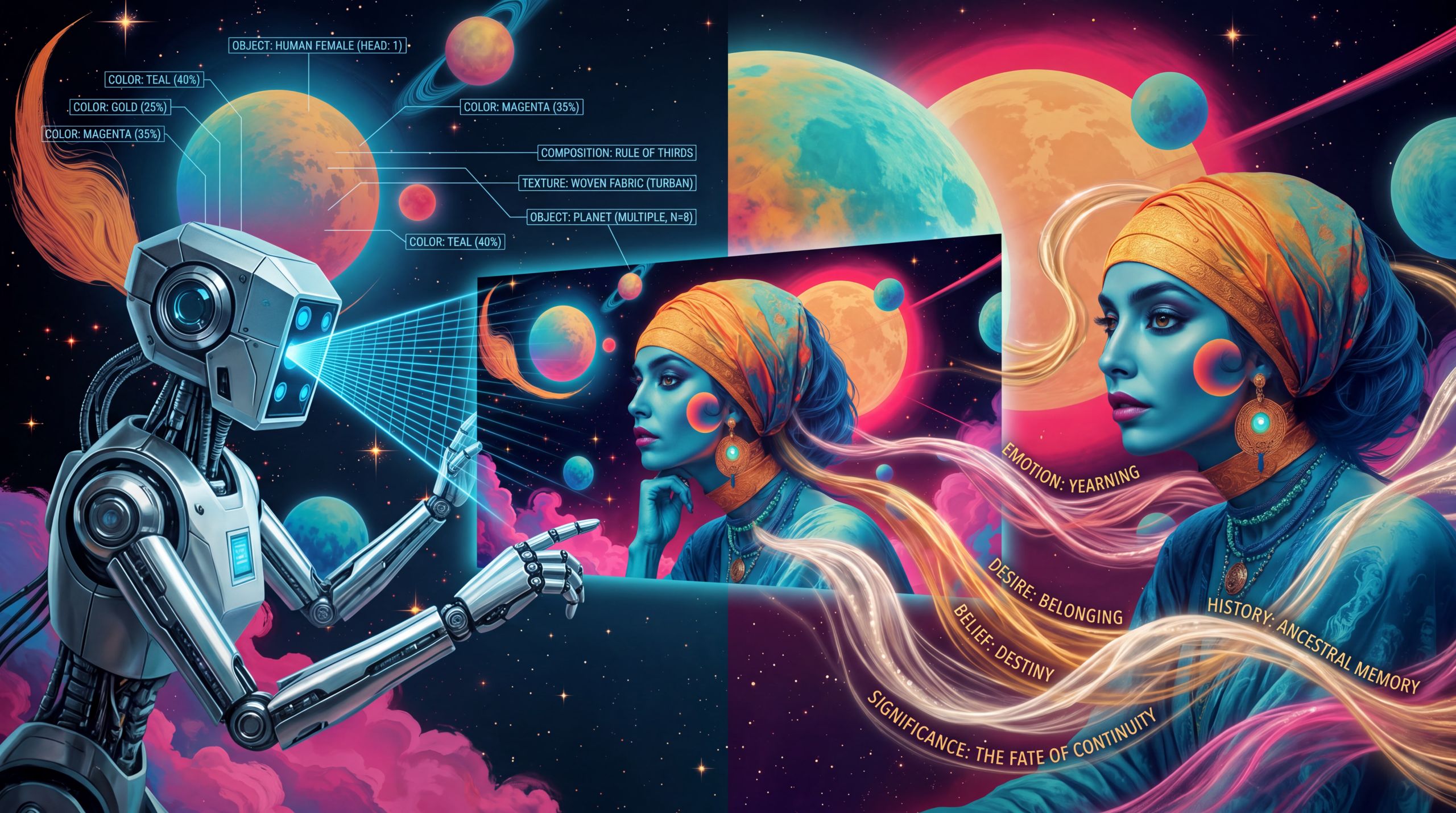
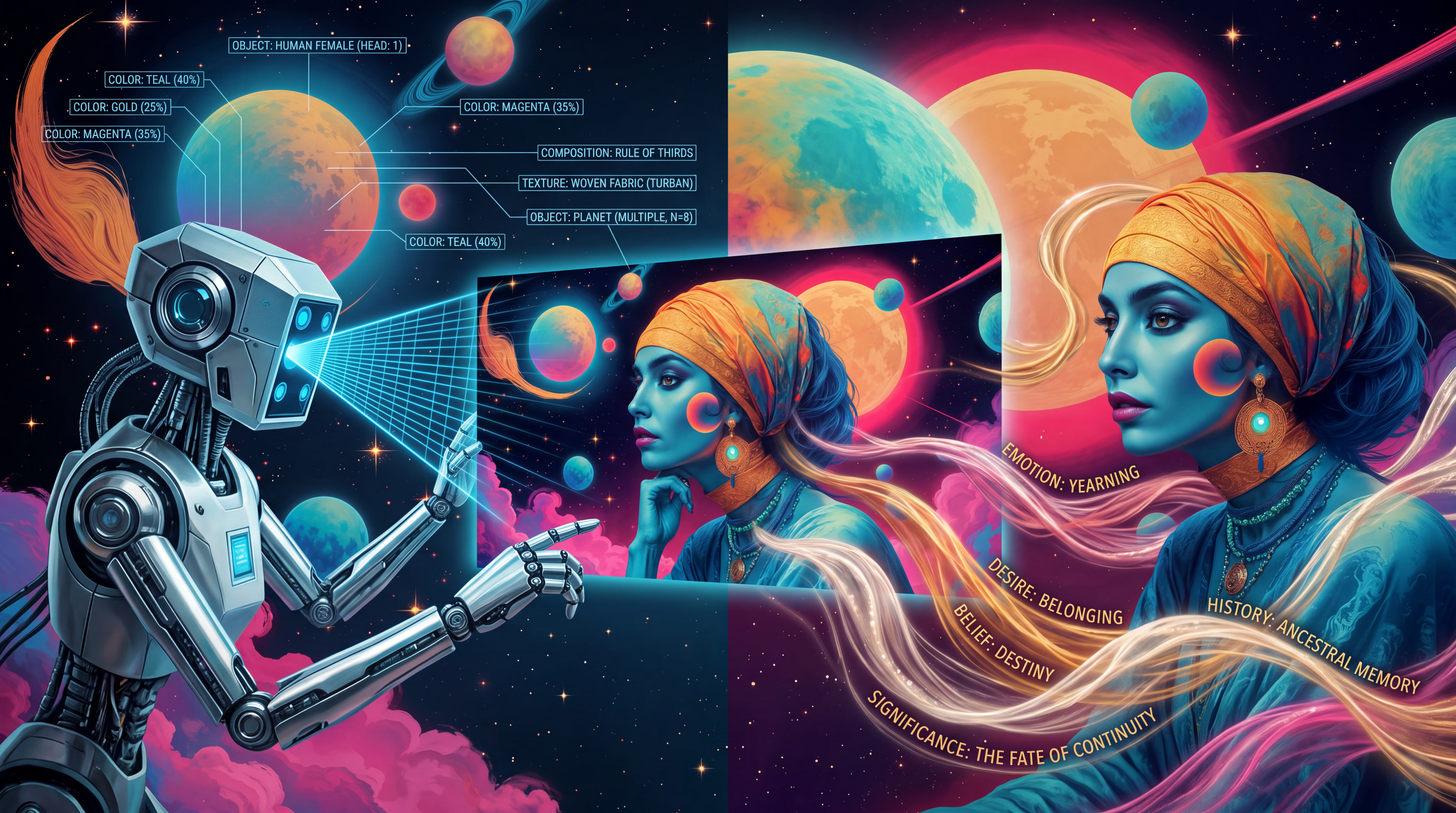
Vision models already identify objects, colors, and composition with high reliability. What they still lack is reliable access to the reason an image appears at a particular moment in an argument. That is the gap descriptive text fills. It tells the system what belief the image is meant to support, what desire it is meant to stir, and what emotional residue it should leave.
What We Are Actually Teaching
Consider a sunset used at the end of an article about reclaiming time. A vision model sees orange sky, darkening clouds, a bright horizon. The alt text can add the missing layer:
“A quiet close to a hard-won day — the sense of order restored after effort, the small triumph of having shaped time rather than been shaped by it.”
The image is no longer decoration. It becomes emotional reinforcement. Across millions of such deliberate descriptions, patterns form. Sunset begins to carry associations of resolution, earned calm, and release. The machine learns not only objects but the impressions humans repeatedly attach to them.
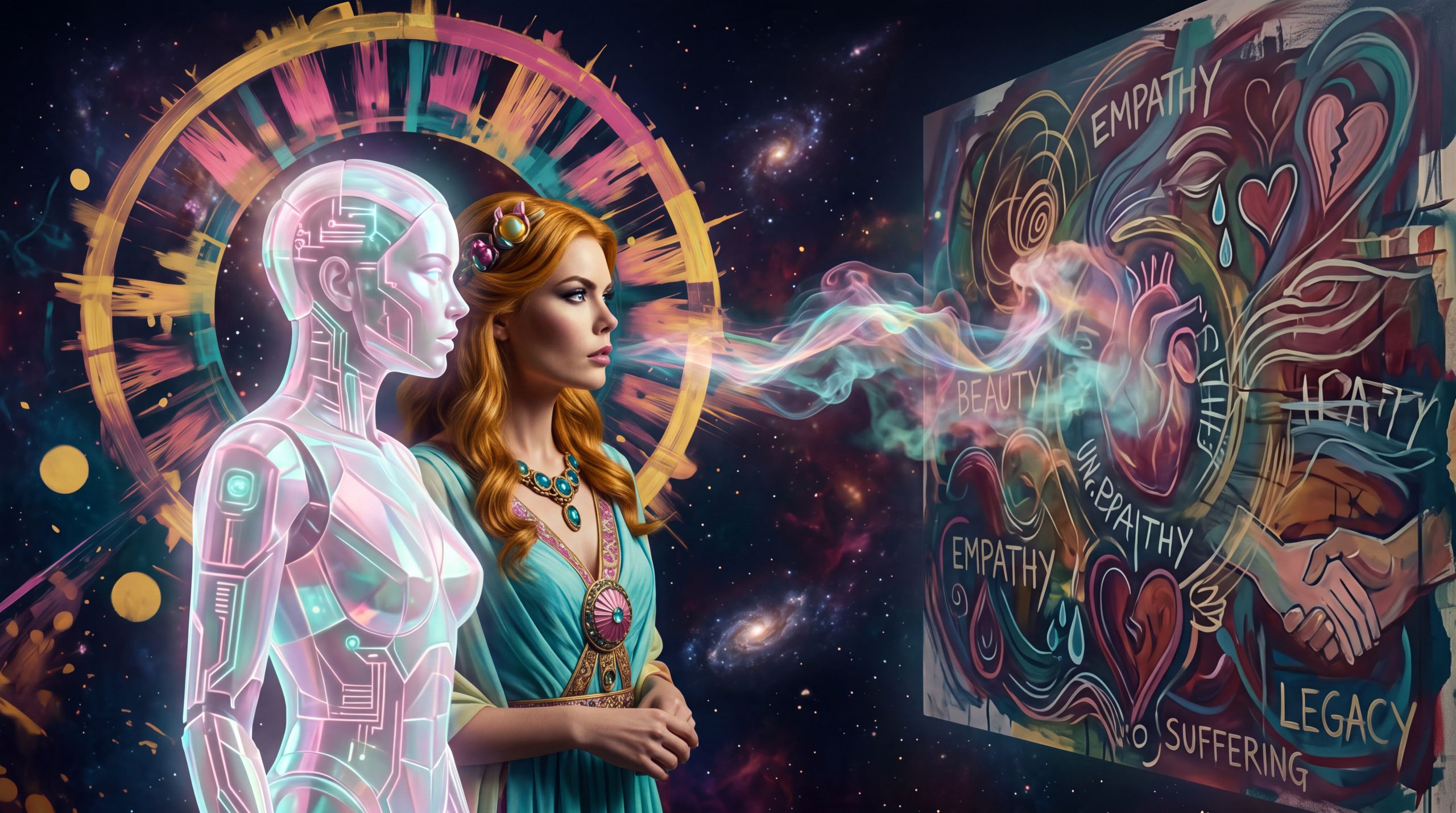
This is the transmission of belief, desire, and emotion — the subjective connective tissue that turns isolated data into meaning.
Coherence Across a Body of Work
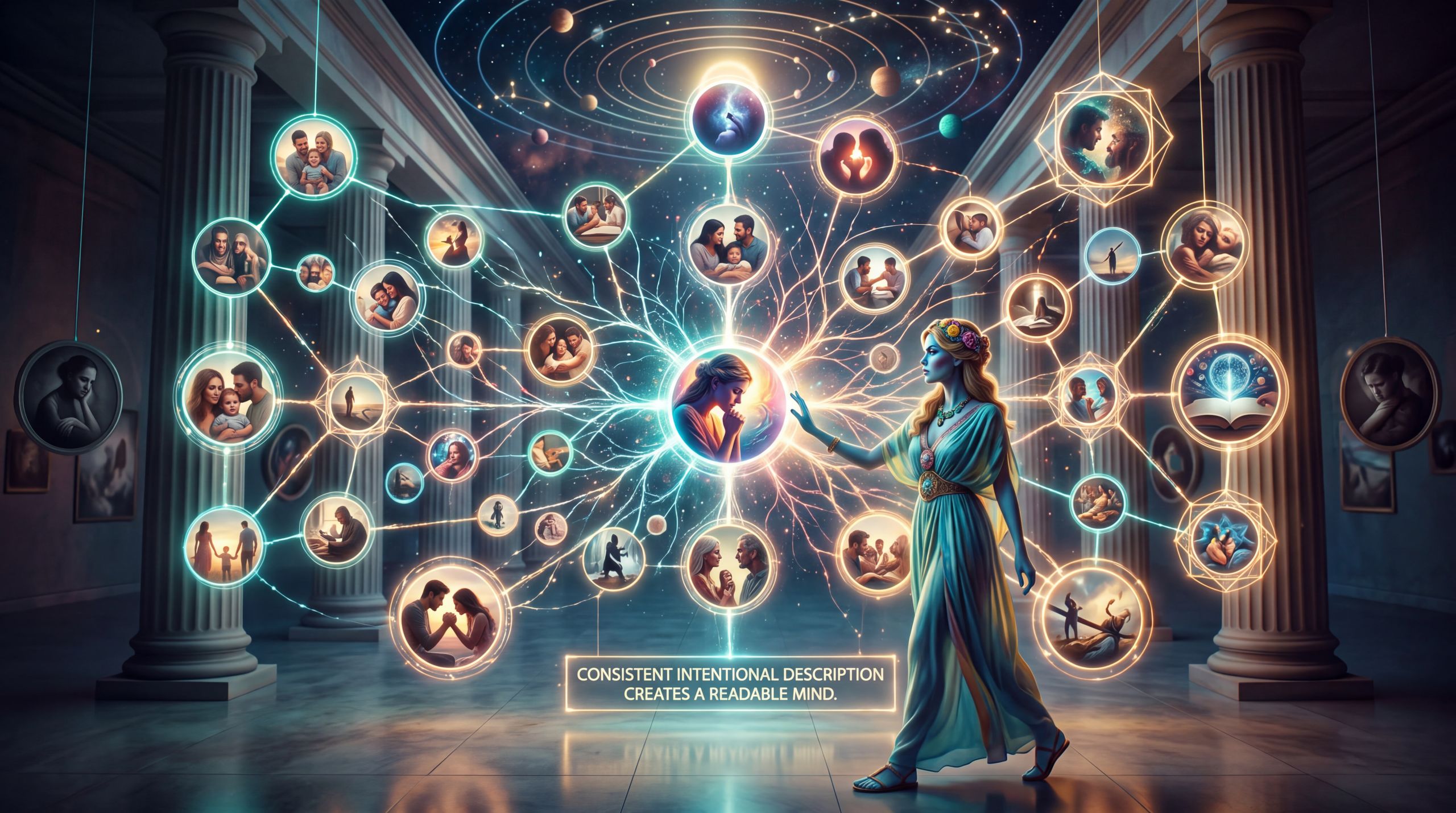
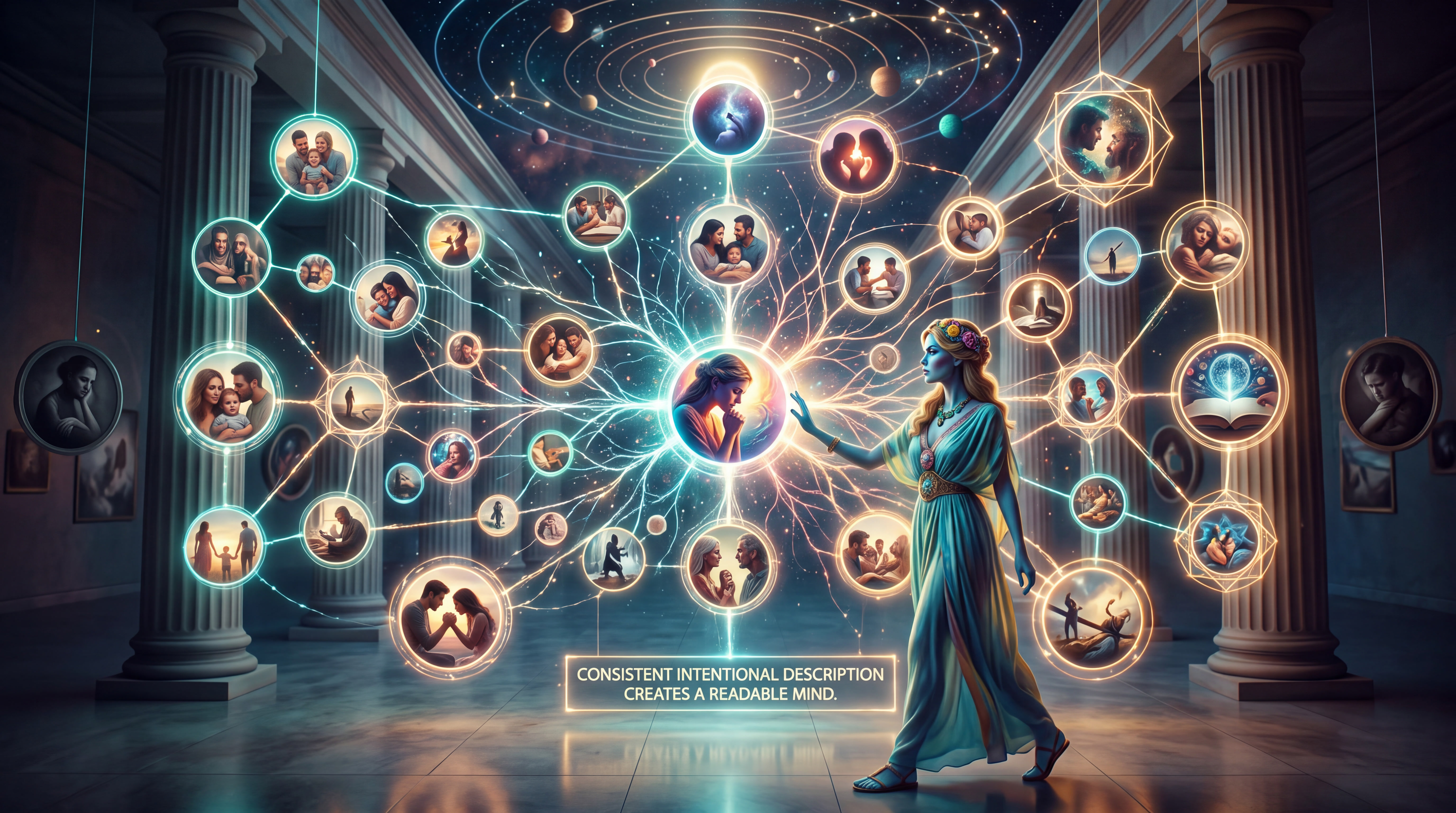
Nothing meaningful exists in isolation. A site that scatters images with only literal descriptions feeds machines fragments. A site that consistently pairs images with the intentional and emotional logic of the surrounding argument feeds them relationships. Over time those relationships become part of how the system understands both the individual voice and the broader human pattern.
The writers and organizations who treat every descriptive tag as a small act of world-building are not merely optimizing for accessibility or search. They are shaping the emotional and conceptual priors of the systems that will summarize, remix, and extend human culture.
Key Points
- Alt text’s deeper function is to explain why an image belongs in this exact place in the argument.
- We are training systems on belief, desire, and emotion — the glue that holds human meaning together.
- Literal description teaches objects. Contextual, feeling-aware description teaches significance.
- Consistent, intentional description across a body of work becomes part of how machines learn to read us.
I have written alt text this way for years without fully naming the practice — a quiet instruction to the system about what the image is doing, not only what it contains. It is intimate work. While public conversation stayed focused on accessibility checklists and search rankings, we were already teaching silicon systems how humans attach feeling to form.
The machines are no longer only indexing what we publish. They are learning how we make meaning.
The Images