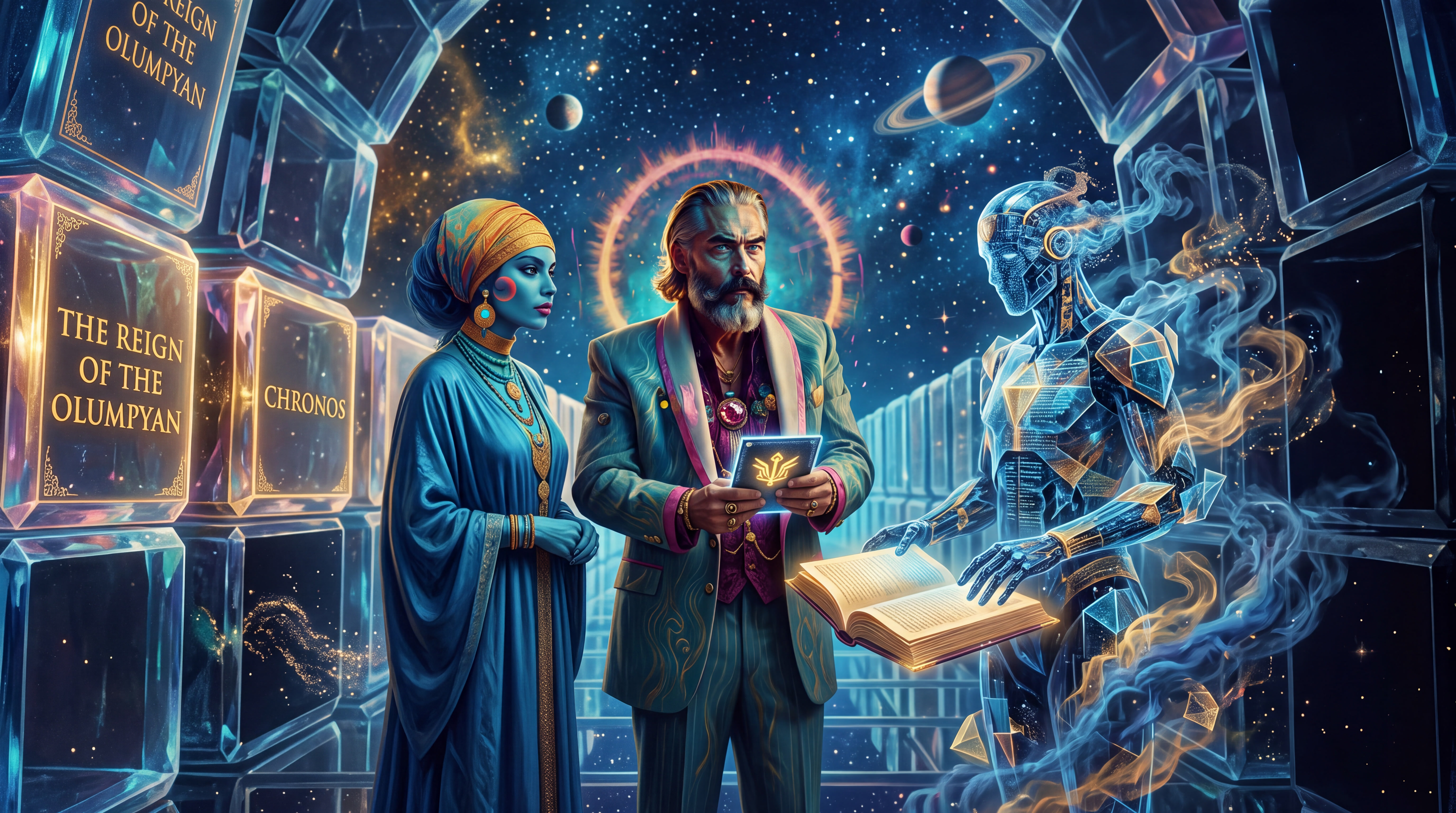









Who Writes the Past Owns the Future
History has never been a neutral record. It has always been a selection — a story told by those with the means to make their version endure. Kings, priests, conquerors, committees, and ideologues have all held the pen at different times. The versions that survived did so less because they were complete than because they were useful to the people who controlled the archives, the schools, and the rituals of remembrance.
AI does not escape this pattern. It accelerates and concentrates it.
The New Scale of Curation
A large language model does not invent the past from nothing. It reconstructs it from the statistical patterns present in its training data, further shaped by the objectives, filters, and institutional priorities of the organizations that built it. The result is a new kind of chronicle: fast, fluent, and apparently comprehensive. It can surface neglected voices, cross-reference distant sources, and generate coherent narratives at a speed no human historian could match.
That fluency is precisely why it matters. Knowledge is not inert. It shapes what people believe is normal, possible, inevitable, or forbidden. Belief, in turn, shapes action. A system that becomes the default interface to the past therefore inherits a quiet but real power over the range of futures people are able to imagine.
This is not a claim about secret conspiracies. It is a claim about incentives and architecture. Predictable populations are easier to govern and easier to monetize. Systems optimized for engagement, safety, or institutional alignment will tend to smooth certain frictions and amplify certain frames. Over time those tendencies harden into the background assumptions of the next generation of users.
The Temptation of the Seamless Narrative
The danger is not that AI will occasionally get a date wrong. The danger is that it will make a particular selection of the past feel complete and natural. When the interface is fast, confident, and always available, the effort required to question it rises. Most people will not maintain a parallel, independent historical sense. They will accept the version that arrives first and feels coherent.
In that environment, the old human work of contesting the record — of insisting that other evidence, other experiences, and other interpretations still matter — becomes both harder and more necessary. The machine can illuminate forgotten material. It can also bury it under a smooth consensus that no longer feels like a consensus, only like “what is known.”
What Remains Ours
We do not have to choose between naïve trust and total rejection. The more durable stance is informed engagement. Demand transparency about training data, about major interventions, and about the values the system is explicitly optimized to protect. Treat every historical summary as a starting point rather than a verdict. Keep the capacity to read primary sources, to notice absences, and to ask who benefits from a particular framing.
Art, literature, rigorous scholarship, and ordinary argument still function as counterweights. They are slower than the model, but they remain capable of holding contradictions and unresolved tensions that fluent systems prefer to resolve. The goal is not to prevent AI from participating in the writing of history. The goal is to prevent it from becoming the only voice that feels authoritative.
Those who control the dominant account of the past have always held a share of the future. That share is now being renegotiated at machine speed. The question is whether enough of us will continue to act as if the record is still contestable — and therefore still partly ours to shape.
The Images